Hair Loss
 Cycles of Hair Growth
1. Anagen
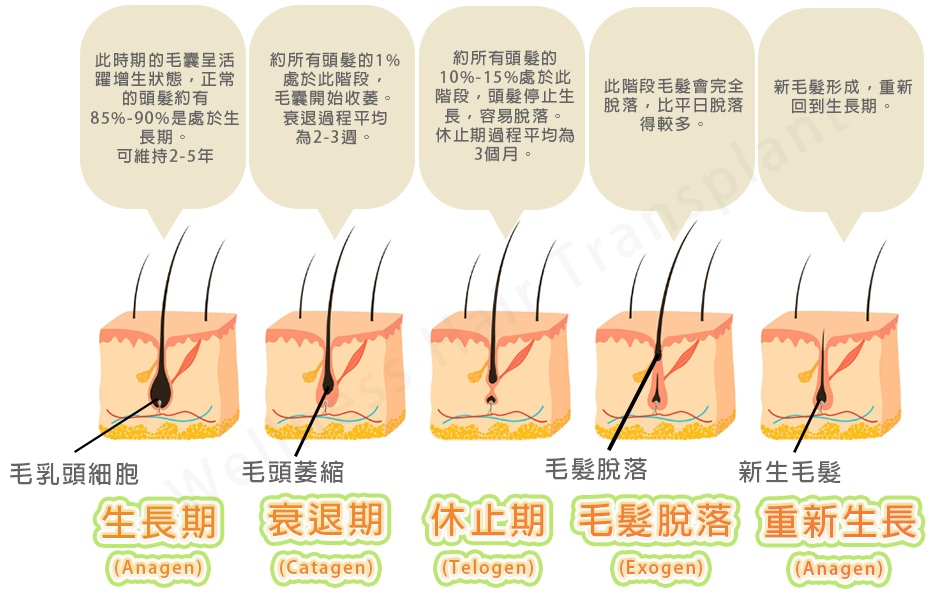
The anagen phase of the hair growth cycle is the longest of the three phases and can last for 2-5 years. Hair follicles at this stage are actively proliferating, with about 85% to 90% at this stage. During this period, the hair will continue to grow to become longer and thicker, and the roots of the hair will swell to form hair balls.
2. Catagen
About 1% of all hair will enter the catagen phase, and the hair follicle cells are preparing to enter the cell atrophy stage. At this stage, the hair no longer has cell division, so the hair will not grow longer or thicker and the hair bulbs under the scalp begin to shrink. This process lasts on average for 2 to 3 weeks.
3. Telogen
About 10% to 15% of all hair will be in this phase. At this stage, the hair follicles will completely shrink and stop growing. Old hair enters a resting state called telogen and falls out naturally within two to four weeks. The average process takes 3 months. New hair will gradually grow and replace the old hair.
Males
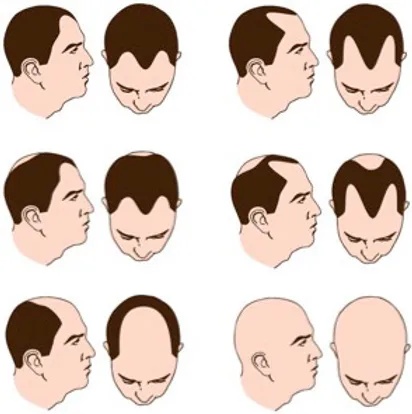
The facts about Male Hair Loss
Hair Loss affects over 50% of men around the world. The most common cause is male pattern Hair Loss, others are caused by alopecia areata, scars and burns and others.
What is Male Pattern Balding? (MPB)
MPB refers to the inherited pattern of Hair Loss genetically passed from either side of the family. MPB may skip a family member or even a generation and starts sometime after puberty.
Why does man suffer from MPB?
The hair on top and front of the scalp has higher levels of the enzyme 5 alpha reductase (5AR) that causes an increase in dihydrotestosterone (DHT). DHT miniaturises the hair over time, gradually, in many cases until none is left and the head becomes shiny bald. The hair at the back of the scalp (known as 'permanent hair') naturally has lower levels of DHT so this hair does not commonly fall out.
Females
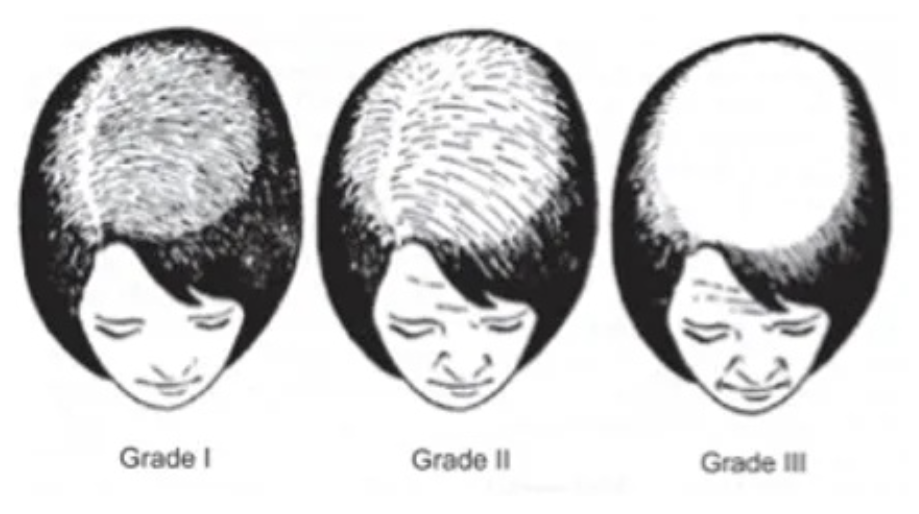
The facts about Female Hair Loss
Women can suffer from female pattern Hair Loss, but there are also other factors that may affect women, like hormonal changes, especially after childbirth or menopause. Female pattern Hair Loss has a variable inheritance strongly inherited through women in some cases and perhaps through male relatives in others. Most doctors believe that the enzyme 5AR is involved.